
An Introduction to Drawing
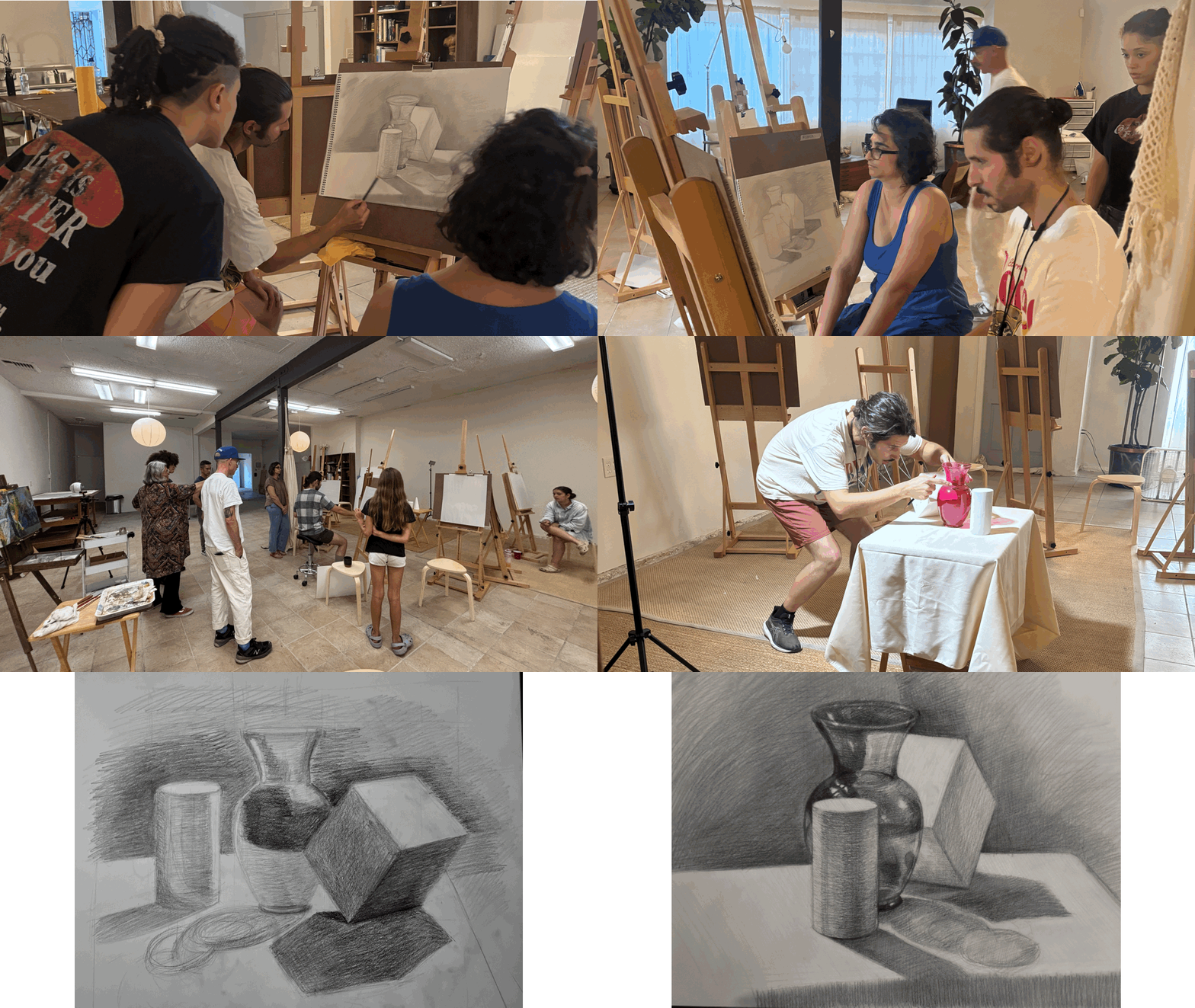
Our first drawing course at Studios Colibrí began with a question that sounds almost too simple: how do we learn to see?
Over four weeks, we worked our way through some of the foundations of observational drawing, but one of my favorite moments came when everyone suddenly found themselves standing in fencing poses in front of their easels.
We were working on large 18 × 24 inch sheets of paper and trying to get away from the small, careful movements that drawing can sometimes encourage. Instead of drawing from the wrist, we began drawing from the elbow, the shoulder, and eventually the whole body. Marks got longer. People became less hesitant. The drawings started feeling more alive.
That's something I love about teaching drawing. Technical knowledge matters enormously, but drawing isn't only a collection of techniques. It's also attention, movement, proportion, memory, judgment, and learning to trust what you're seeing.
By the last week, everyone's drawings had changed. Not because we had discovered some shortcut to drawing well, but because people were beginning to understand what to look for and how to translate what they saw onto the page.
Thank you to everyone who showed up every Friday, worked through the frustrating parts, laughed through the stranger exercises, and helped inaugurate our first drawing series at the studio. The room felt a little lonely the following Friday.
We're continuing this fall with Drawing II: Structure & Light, where we'll move from observation into structure, volume, and the way light describes form.